


Gangster Miami RP: Grand City
4.736.00 Reviews
App Specs
- Version
- 1.1.7
- Updated On
- License
- Free
- Downloads
- 5,000,000+
- Developer
- Universe Game Labs
- Categories
- Role Playing
- Platform
- Android
Screenshots
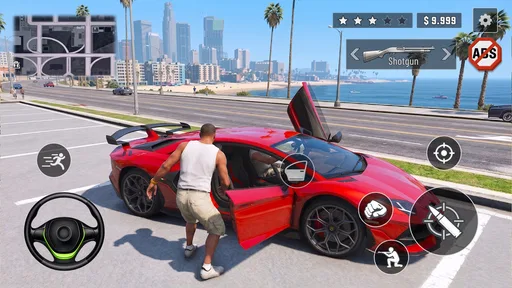
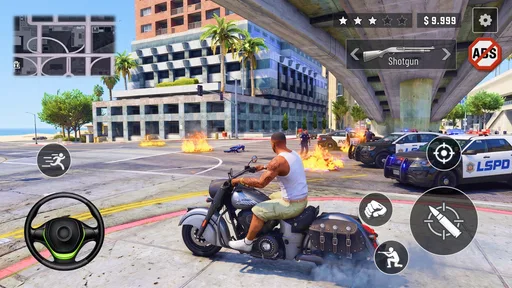
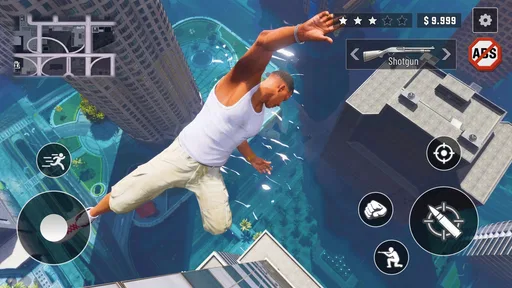
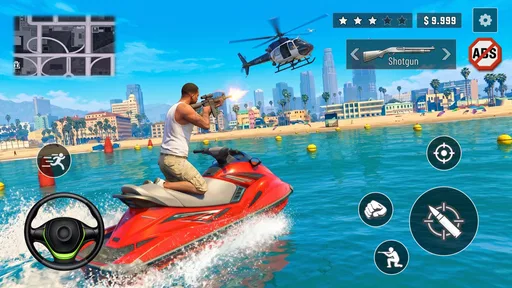
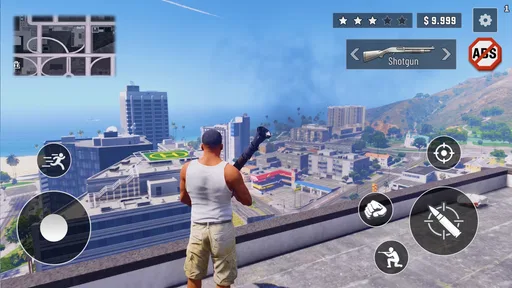
 Analysis by AppCompare
I went into Gangster Miami RP: Grand City expecting a role-playing game built around open-world action, and that is the right broad expectation: the appeal is being able to spend a session in a city setting rather than following a purely menu-driven routine. The key question for me is not whether the premise sounds familiar, but whether that freedom gives me a satisfying reason to keep playing. My answer is that it can, especially if you enjoy setting your own pace, though it is a less obvious fit if you want a tightly guided story or a short, polished sequence of missions.
Getting into the city and choosing a first move
The first useful mindset is to treat the game as a place to explore, not as a checklist you have to clear in a particular order. Its open-world action framing makes curiosity part of the experience: you can approach a session by deciding what kind of activity sounds enjoyable, rather than expecting the game to funnel every player through one fixed route. That gives the opening a relaxed quality, but it also means players who rely on clear instructions may need to make their own goals.
In practical terms, I would begin with a modest plan: spend the first stretch learning how the city feels, then choose one thing to pursue instead of trying to make progress everywhere at once. That small adjustment matters in a role-playing game with an open-world setup. If you immediately judge the experience by whether it delivers a dramatic story beat, you may miss the appeal of moving around and creating your own rhythm. If you prefer a guided introduction, by contrast, that lack of a strong external agenda could feel like friction rather than freedom.
The game is a free role-playing title from Universe Game Labs, and its identity is clearly aimed at players drawn to a gangster-themed city setting. It is not the same proposition as a fantasy RPG centered on character builds or a conventional action game built around a linear campaign. The useful comparison is with other open-world role-playing experiences: here, the draw is the urban action premise and the room to decide what to do next. I would choose it for that mood, not as a substitute for a deep, carefully staged narrative.
One practical tip is to decide what counts as a successful first session before you start. It might be simply getting comfortable with the city and the game’s basic feel, rather than expecting a major unlock or a complete story arc. Setting that expectation helps you judge the game on its own terms. An open world can feel aimless when you arrive expecting constant direction; it can feel inviting when you are happy to explore and make your own small objectives.
Why the action needs room to breathe
In a game like this, action is only one part of the opening loop. What happens around it—how readily you can move from one activity to another and whether the city makes you curious enough to keep going—shapes the overall impression too. I would pay attention to whether your chosen activity naturally leads to another one. If it does, the world can provide its own momentum. If you find yourself repeatedly pausing to decide what the point is, this may not be the right kind of role-playing game for you.
That distinction is especially useful for casual players. If you have a little time between other tasks, an open-ended city game can be appealing because you can choose a small personal target instead of needing to remember a long sequence of plot details. But it still asks you to supply some direction. I would not recommend it to someone who wants every session to open with a clear objective and end with a neatly resolved chapter.
Worth Reading Before You Choose

Baby Panda World Brings Quick Play to Modern Phones, but Its Game Library Feels Busy

ESPN’s Live Game View Makes Following Close Games Easier

QuizzLand Review: A Good Fit for Short Trivia Breaks, Not Every Player

Basketball Stars: Multiplayer Is Fast, but Can It Recover When Matches Go Wrong?

WEBTOON Turns Phone Updates Into a Better Reading Routine

Link to Windows Runs on Shared Habits, Not Social Feeds
How the feedback keeps a session moving
The satisfying part of an action loop is the connection between effort and response: you do something, the game reacts, and you have a reason to make the next choice. In Gangster Miami RP: Grand City, the open-world premise puts that rhythm in the player’s hands. You are not necessarily waiting for a single scripted moment to tell you that the session has begun. Instead, the appeal comes from choosing an activity, seeing how it plays out, and deciding whether that result makes you want to continue or change direction.
This has a trade-off. A player who likes experimenting can treat a less structured stretch as room to try a different approach or explore somewhere new. Someone who wants rapid, obvious rewards may interpret the same stretch as downtime. My advice is to notice how often you make a choice because you are genuinely interested, rather than because you are searching for a prompt to tell you what to do. That is a better test of whether this kind of open-world role-playing will hold your attention than the theme alone.
There is also a useful way to keep the experience from becoming repetitive: vary the purpose of a session. One time, focus on getting a feel for the city; another time, pick an action-oriented goal; on a later visit, see whether you still enjoy returning to the same setting. This is not a claim about a particular unlock or a hidden system. It is a simple way to assess the game’s core appeal without assuming that every session needs to be a bigger version of the last one.
For an everyday example, imagine opening the game after dinner when you have a short window before doing something else. If you are comfortable setting a small goal yourself, you can use that time to dip into the city and see where the session leads. If you need a definitive ending before you can put a game down, the open-ended structure may make that brief visit feel unfinished. I would treat a stopping point as part of your own plan: decide in advance when you are ready to leave, rather than waiting for the game to provide a natural finale.
This is where it differs from a more mission-led action RPG. A tightly structured alternative usually offers clearer short-term feedback: complete a defined task, get a clear result, and move on. The city-based approach is more flexible but asks more from you as a player. I find that flexibility appealing when I want to choose my own pace; I would pick a mission-focused game instead when I want a stronger sense of progression and a more predictable payoff.
What a reward means in an open-ended game
Rewards are not only numerical progress or a new item. In an open-world game, a reward can be the feeling that a decision led somewhere interesting, that you found a new reason to explore, or that an action sequence gave you the kind of moment you came for. That broader definition suits this game’s premise. It also sets a fair expectation: if you only enjoy games when they constantly present visible milestones, the open-world format may not give you enough immediate reassurance.
A non-obvious way to judge the loop is to separate two questions after a session: did the activity itself feel enjoyable, and did it make me curious about coming back? Those answers can differ. You might enjoy a single burst of action but feel no pull to return, or have a fairly quiet session that leaves you wanting to explore more. The second reaction is a stronger sign that the city’s open-ended structure is working for you. It is more informative than deciding from one dramatic or uneventful moment.
The game has a 4.6 average from around 4,500 ratings and has passed one million installs. Those figures suggest that it has attracted a substantial audience, but they should not replace your own preference test. A popular open-world game can still be the wrong fit if you dislike supplying your own goals. I would read its broad appeal as a reason to give the premise a fair try, not as proof that its pace will suit every role-playing fan.
When to stop, return, or choose something else
Open-world sessions do not always end with a tidy chapter break, so the reset is partly a matter of how you choose to leave. Before closing the game, it helps to note what you would like to do on your next visit: continue exploring, try a different kind of activity, or simply see whether the city still feels engaging. That tiny habit can make a return session easier to start. It also reveals whether the game has given you a real reason to come back, rather than just leaving you with an unresolved sense that you should keep playing.
I would not force long sessions just because the setting suggests a large world. If the action has stopped feeling rewarding, taking a break is a better test than pushing through out of habit. On returning, see whether the freedom feels fresh again. If it does, the loop is doing its job. If you are still looking for a clear objective and immediate progression, that is a sign to switch to a more guided role-playing game instead of expecting this one to become something it is not.
For platform context, the current version is 1.1.7, and the stated minimum operating-system requirement is 7.1. It is rated Everyone, which makes its age classification broad, though each household should still decide whether the gangster-themed setting is suitable for the person playing. The free price makes it easy to consider without an upfront purchase, but free does not mean it is automatically the best use of your time. I would judge it by whether its self-directed sessions are enjoyable, not by the low barrier to trying it.
There is a small but telling difference between this kind of game and a sandbox that is compelling mainly because of a deep toolset. Here, the central promise is the city-action role-playing experience, so players should not assume that openness alone guarantees endless variety. The game needs to make your chosen activities feel worthwhile. If you find yourself repeating the same personal routine without renewed interest, changing your goal or stepping away is sensible. If a change of approach brings back your curiosity, that is a good sign the format suits you.
Who I would recommend it to
I would recommend it to someone who likes urban action, enjoys choosing their own pace, and is comfortable creating small goals rather than following a strict campaign. It is especially worth considering if you want a free role-playing game that lets you drop into a city setting and make a session feel like your own. Universe Game Labs has built its appeal around that open-world premise, so the best match is a player who values freedom more than constant instruction.
I would steer a story-first player toward a more narrative-focused alternative, and I would point someone who wants tightly timed missions toward a game with a clearer sequence of objectives. Players who are easily frustrated by uncertainty about what to do next may also prefer a more guided experience. Those are not flaws in the player; they are simply different expectations. Knowing that before starting makes it easier to decide whether the city’s open-ended action sounds inviting or like work.
My overall verdict is that Gangster Miami RP: Grand City is best approached as a flexible urban role-playing diversion, not as a guaranteed source of a gripping storyline or an always-directed progression path. Its action loop works when you enjoy choosing an activity, responding to what happens, and returning because you have another idea to try. The main limitation is also the defining feature: you may need to provide the momentum yourself. If that sounds appealing, it is worth a look; if you want the game to plan every step and deliver a firm payoff each time, another kind of RPG will probably serve you better.
Pros
- Open-world city gives players room to explore between missions.
- Driving and combat add variety to the role-play experience.
- A broad selection of vehicles supports different play styles.
- Character progression provides goals beyond simply exploring.
- The urban setting suits fans of crime-themed role-playing games.
Cons
- The busy city can feel crowded during action-heavy moments.
- Combat may take practice for players new to the controls.
- Progression can feel repetitive if you prefer story-focused gameplay.
- Performance may vary depending on your device.
- The crime-focused theme may not appeal to younger players.
FAQs for Gangster Miami RP: Grand City
What is Gangster Miami RP: Grand City?
Gangster Miami RP: Grand City is presented as an open-world crime and role-playing game set in a city inspired by Miami. Players can explore urban areas, take part in missions, and engage with familiar gangster-game activities. Exact features and available modes can differ between versions, so check the store listing and in-game descriptions before downloading rather than assuming it offers a particular story, multiplayer system, or set of vehicles.
Is Gangster Miami RP: Grand City an online multiplayer game?
The “RP” in the title may suggest role-play, but it does not by itself confirm that the game has live online multiplayer. Check the current app-store description for details about internet requirements, multiplayer modes, and whether an account is needed. If you are looking for a specific kind of role-play experience, verify that the listed features match your expectations before installing, since game modes and connectivity requirements can vary by release.
Is Gangster Miami RP: Grand City suitable for children?
The game’s gangster theme may include crime, combat, or other mature subject matter, so parents should review its age rating and content information before allowing a child to play. Ratings can vary by country and platform, and they may not explain every detail of the gameplay. It is also sensible to check whether the app includes advertising, in-app purchases, or online interaction, then use device-level parental controls if appropriate.
Does Gangster Miami RP: Grand City require an internet connection or have in-app purchases?
Requirements can depend on the version and device. Some games allow parts of their content to be played offline, while downloads, updates, ads, or online features may need an internet connection. Likewise, the presence and price of optional purchases can change over time. Before installing, review the app-store page for connection requirements, purchase information, and any subscription details, and check the game’s settings or purchase prompts before spending money.
Will Gangster Miami RP: Grand City run well on my phone, and how can I download it safely?
Performance depends on your device’s operating system, hardware, available storage, and the game’s current requirements. Check the official Google Play or Apple App Store listing for supported devices, required space, and recent compatibility information. Download from the official store where possible, confirm the publisher and permissions, and avoid unofficial installation files. If performance is poor, closing background apps or lowering available graphics settings may help, if those options are provided.


